
Physiotherapy in Amsterdam South · Rivierenbuurt
Method
"All body tissues should display a certain degree of movement, and loss of this mobility has an adverse effect on health."
Approach
A complete treatment
When there's a problem, I'm here to solve it together with you
My aim is to give my patients a complete treatment. That means that when there is a problem, I am there to solve it together with the other person. But I would much rather try to prevent problems in the future, or make sure that whatever is still possible for someone is optimised. That can take the form of personal training and doing exercises, but something that certainly belongs here is the physiotherapist after the treatment. He keeps in touch, answers questions and gives advice. The bond remains. That has great benefits for the patient, who stays independently mobile for longer. On a repeat visit the contact is open and the situation is clear. This is true for me as a physiotherapist too, since you know each other and each other's story. That builds trust, a good starting point to build mobility on!
The patient
Who is the patient?
Mental and physical wellbeing
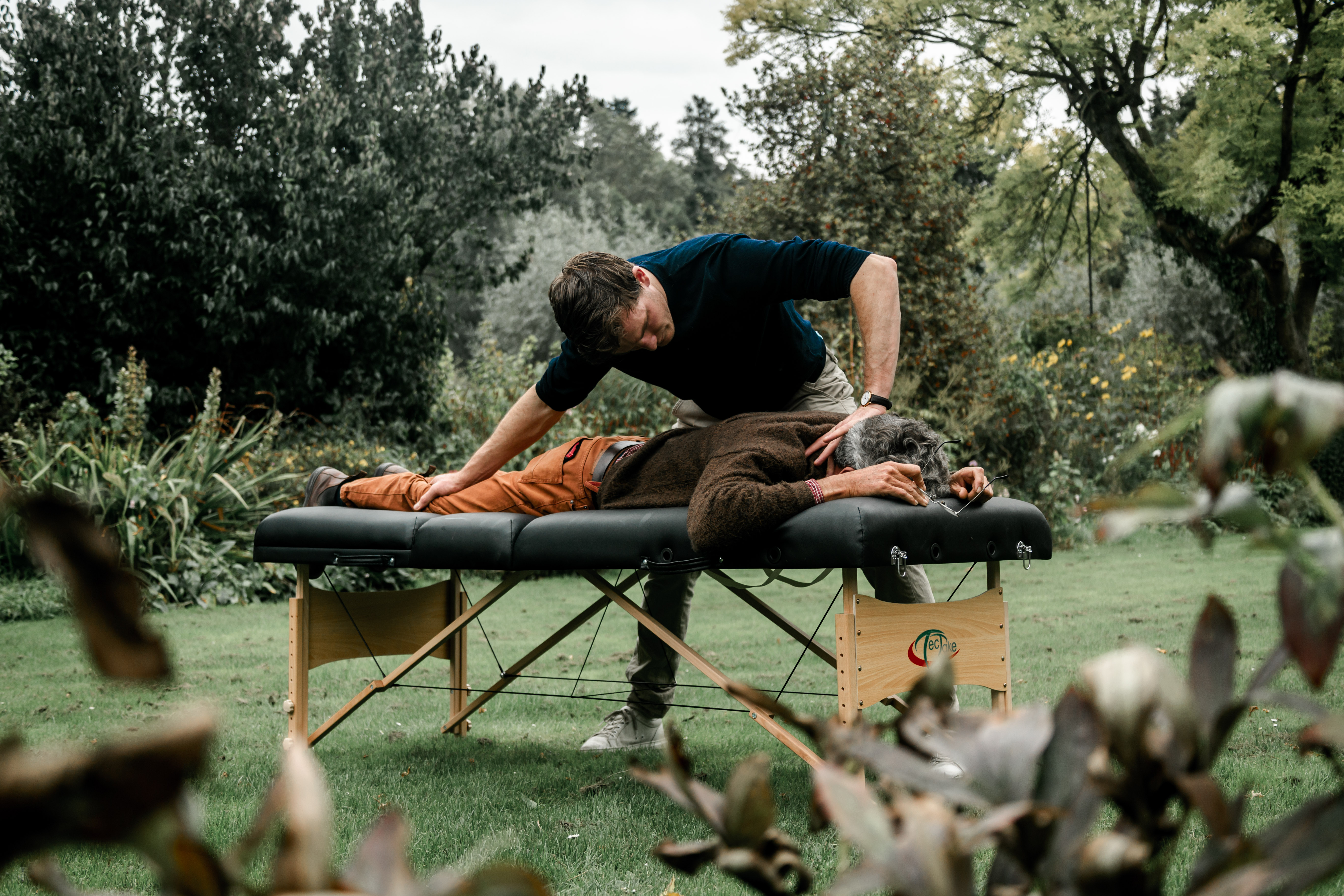
In many cases a first contact with the (family) doctor and physiotherapist is made because of a complaint. But that is not necessarily the case. Improving circumstances or getting physical processes under control can also be a reason. It should be noted that mental and physical wellbeing go together in optimising someone's mobilisation and quality of life in general. The one does not go without the other.
Osteopathy
Osteopathy and the 6 domains in balance
In search of your setpoint
Setpoint? Physical complaints are connected to your sleep, stress, breathing, immune system, nutrition and movement. Very often one or two domains play a dominant negative role in your recovery process. They can, for instance, affect how you move or how you feel. While according to the body's normal physiological recovery processes it should have healed long ago, you keep walking around with your complaints. That is unnecessary. After all, the body has an excellent self-regulating system. But how do you actually make sure that body starts working again in a natural way, the way it is supposed to, so you experience that vitality again? Close to your setpoint.
But first, what is osteopathy?
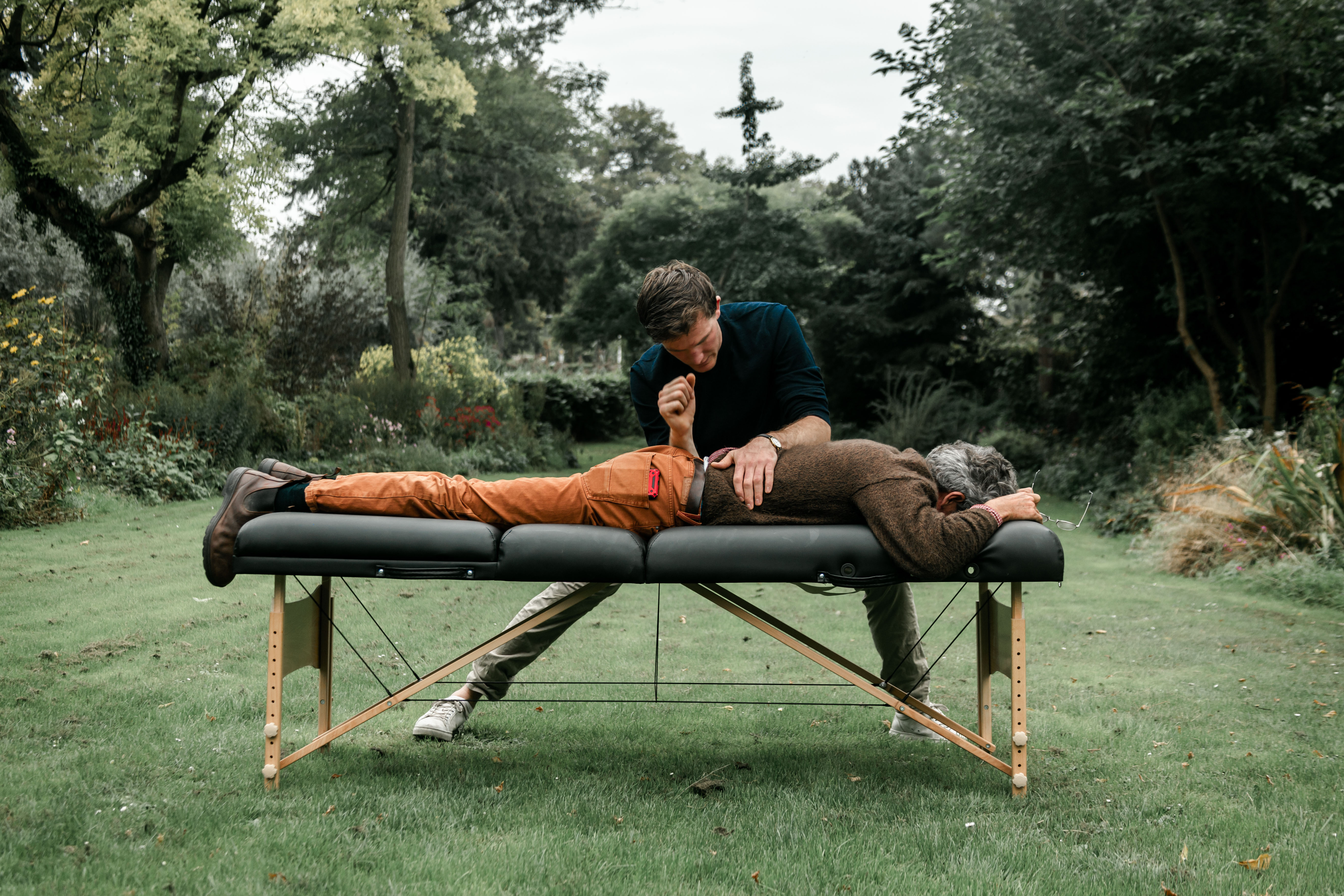
Of all forms of manual medicine, osteopathy is closest to the founding idea: everything that lives flows. Just over a century ago, the American doctor Andrew T. Still (1828-1917) developed osteopathy. He combined his medical knowledge with his own new insights. One such insight at the time was that all body tissues should display a certain degree of movement, and that the loss of this mobility has an adverse effect on health. He developed a way to detect tissue with reduced mobility in the body using his hands. With specific manipulations he restored that mobility, in order to have a healing effect on the body. This treatment method was something entirely new at the time. Still, the founder of osteopathy, also made extensive use of natural laws to explain the interdependence and coherence between the different systems. That is why an osteopath examines every structure for its mobility. Reduced mobility means reduced function, through which a ground for illness can develop.
So each system has its own function in the body, and those body systems in turn work together with one another. No system in the body ever works alone or ever heals alone. An isolated injury does not exist. So isolated healing does not exist either.
By means of a specialised questionnaire I can get a first impression of how far you are from your 'setpoint'. Are you interested in this?